Reconstitution 101
"How much BAC water I you need?" "What materials do I need?" "How do I reconstitute my peptides?" If you're asking these questions, this one's for you.

What is reconstitution?
Reconstitution is the process of adding fluid to the peptide vials, converting the freeze-dried powder into an injectable liquid.
Materials needed for reconstitution
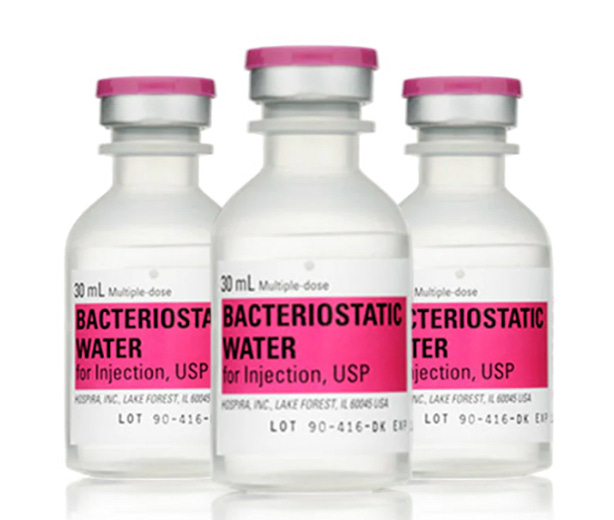
Bacteriostatic water (BAC water) - $19 | ($16.15 with code)
BAC water is used for diluting and dissolving the peptides that come in powder form
It is the safest choice for peptides because it prevents bacterial growth
This allows a single vial to be used for multiple doses, across many days
I recommend Hospira BAC water. This is the gold standard.
There are tons of BAC water brands on Amazon that have failed certifications and can contaminate your peptide vial.
Link here. Use code TUKHA15 for 15% off.
NOTE: 1 bottle of BAC water (30mL) is more than enough to reconstitute multiple peptides.
You can always use my code TUKHA15 on the Flawless Compounds site to save 15% off your order, and it is also stackable with any sitewide sales!
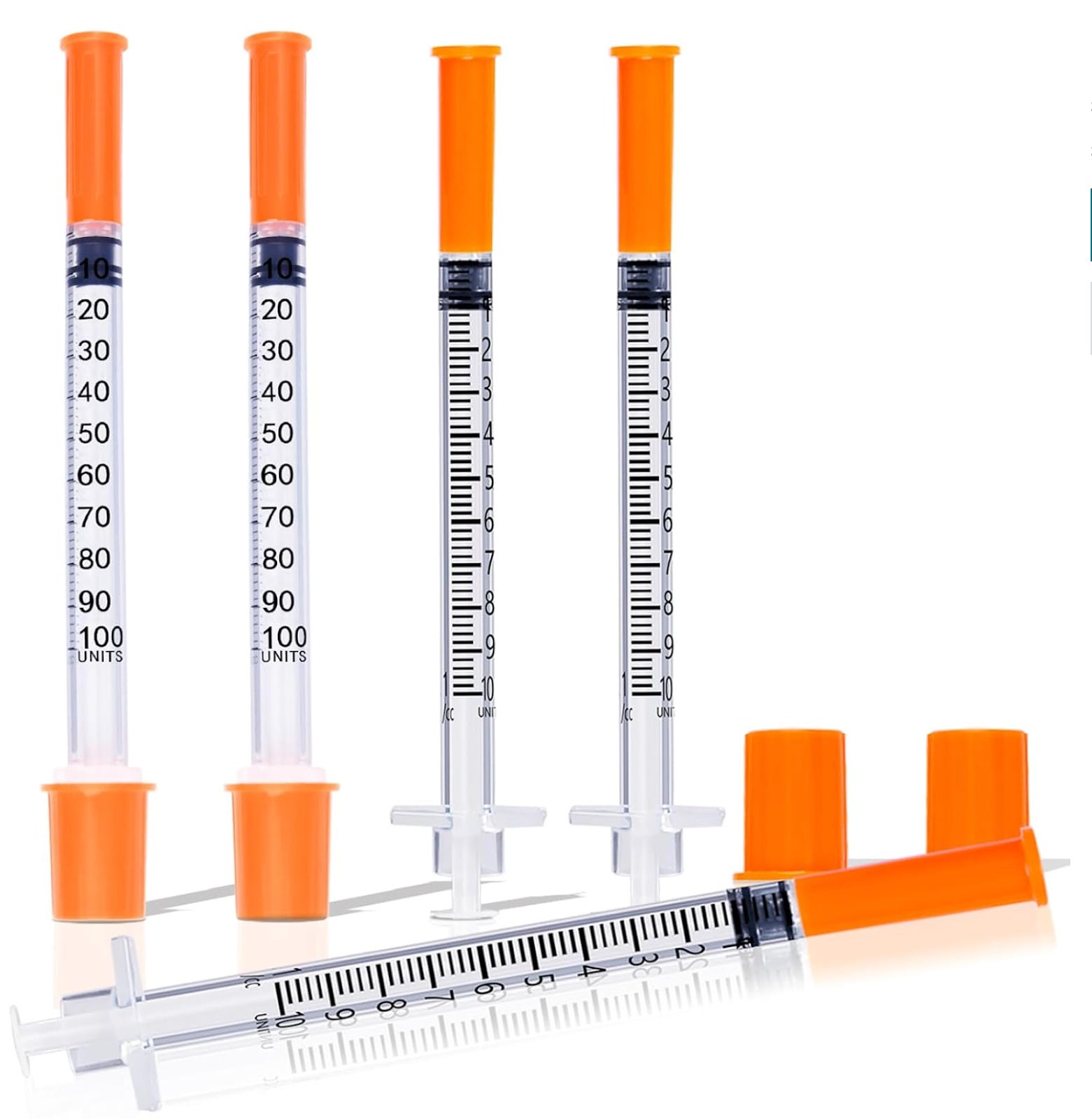
1 mL, 29 G individually wrapped insulin syringes with needle
You can buy a pack of ~25-30 on Amazon just for reconstituting peptides
I also prefer buying 0.5mL, 31 G syringes with needles for injecting peptides into my body, but for reconstitution, I use 1mL, 29 G.
Linkhere
⚠️Important: Use this calculator before you reconstitute your peptides
One of the most common questions I get is:
“Okay but… how much bac water do I need for this peptide?”And also:
“How many units do I need to draw?”
And here’s the honest answer most people don’t like hearing at first:
It depends.
That’s why I hate when people throw out, “Oh, just use 1mL of bac water for every 10mg of peptides” 🤢 WRONG (and also, blocked 🙄)
There isn’t one “correct” amount of BAC water for a peptide. Reconstitution isn’t about following a single magic number. It’s about choosing a concentration that makes dosing accurate, comfortable, and repeatable for you.
That’s exactly why I built this reconstitution calculator (linked here).
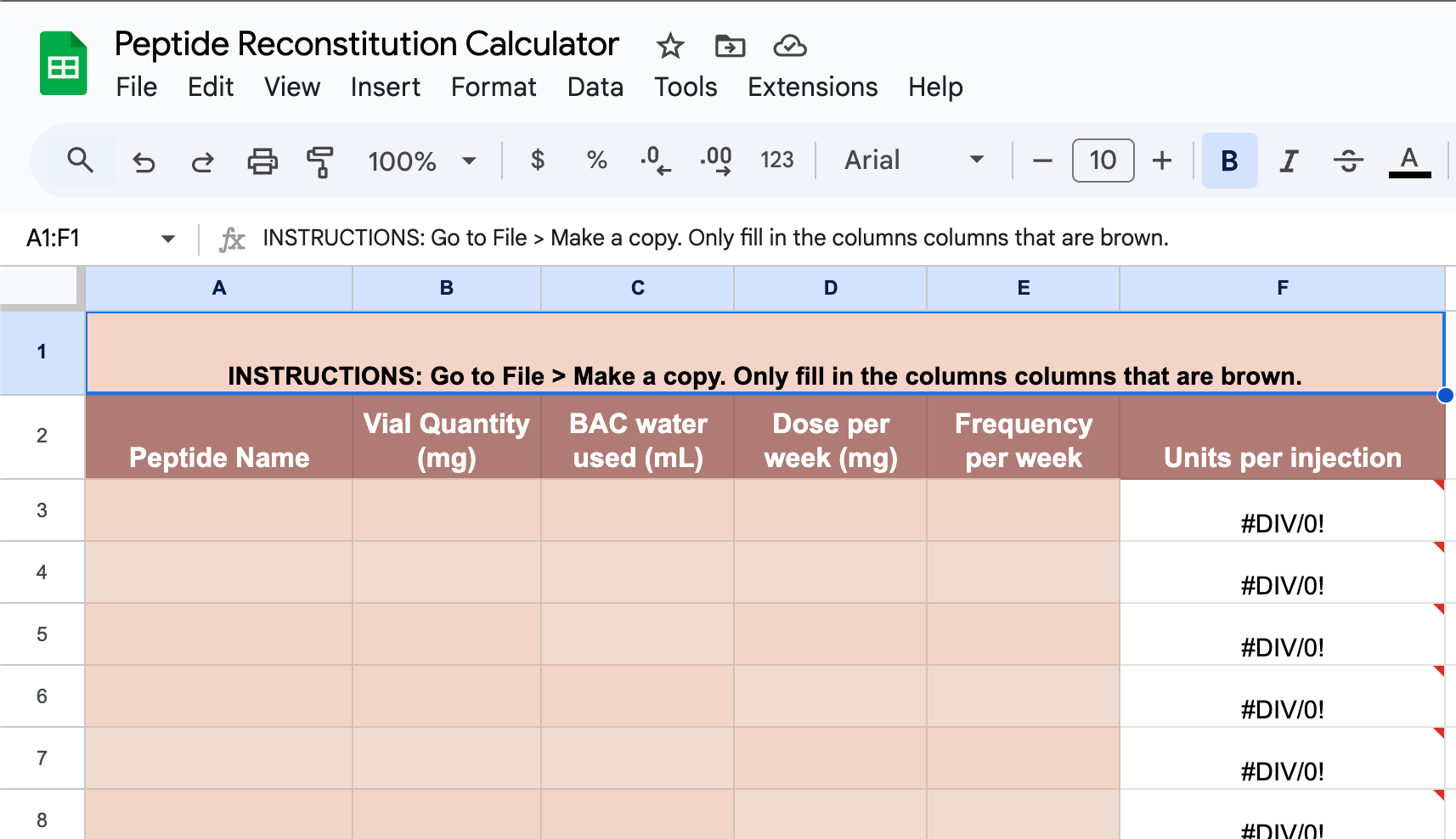
It’s in Google Sheets, so just go to File > Make a copy and then you will have your own and you can save all your peptides as you go!
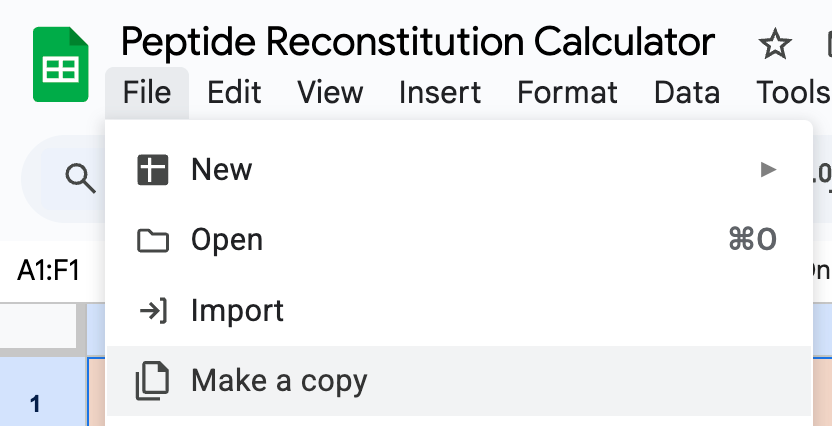
How to use the calculator before you reconstitute
Instead of reconstituting first and hoping the math works out later, use the calculator ahead of time to play with the numbers.
Here’s how:
Enter the Vial Quantity (total mg in your vial)
Enter your target dose (in mg)
Then start adjusting the mL of BAC water
As you change the BAC water amount, you’ll see the units per dose change in real time.
This lets you:
Avoid awkward micro-doses like 3 units
Avoid in-between units like 12.5 or 47 units
Choose round, easy-to-measure doses (ex: 5, 10, 25 units)
Customize the concentration to your preferences, not someone else’s protocol
If you’re doing a really high dose, sometimes less BAC water is better, so that you don’t have to inject such a big volume of liquid all at once
Why this matters
Two people can be taking the same peptide at the same dose and use completely different amounts of BAC water, and both be correct.
What matters is:
You know exactly how many units you’re injecting
Your dose is consistent every time
You’re not guessing, eyeballing, or copying numbers blindly
The calculator gives you flexibility and clarity instead of rigid rules.
So next time you catch yourself asking,
“How much BAC water do I need for X peptide?”
Pause and open the calculator instead.
Test a few options. See what feels clean, simple, and sustainable for you.
That’s how you reconstitute with confidence.
Real life example:
When I was asking the same question as you, “how much BAC water should I use to reconstitute this peptide,” these are the steps I walked through:
What I know:
I want to start taking NAD+
I have a vial that is 500mg
I know most people dose themselves at 100mg/week, but I want to start with half, because I always prefer to go low and slow and let my body adjust
So, my desired dose is 50mg/week
I want to spread that out into 4 injections a week, instead of doing all 50mg in one shot (again, starting low and slow to see how my body responds)
What I plugged in first:
Peptide Name: NAD
Vial Quantity: 500mg
BAC water: 5mL
Dose per week: 50mg
Frequency per week: 4x/week

The result I got for units per injection: 12.5
12.5 units is not a nice, whole number.
Hmm. Let’s try something else.
What I plugged in next:
Same variables in every column, except
BAC water: 6mL

The result I got for units per injection: 15
Perfect!
Now, when I go to do my injections every day, I can just pull 15 units instead of trying to get a perfect 12.5.
In both cases, the dose is the exact same. That’s what’s important here.
Real life example (part 2):
Let’s say the thought of injecting 15 units a day is a little bit spooky.
That’s fair. If you’re new to peptides, or if you have a higher dose, that’s going to be a lot of liquid that you will have to pull and inject.
So what can you do?
Decrease the amount of BAC water.
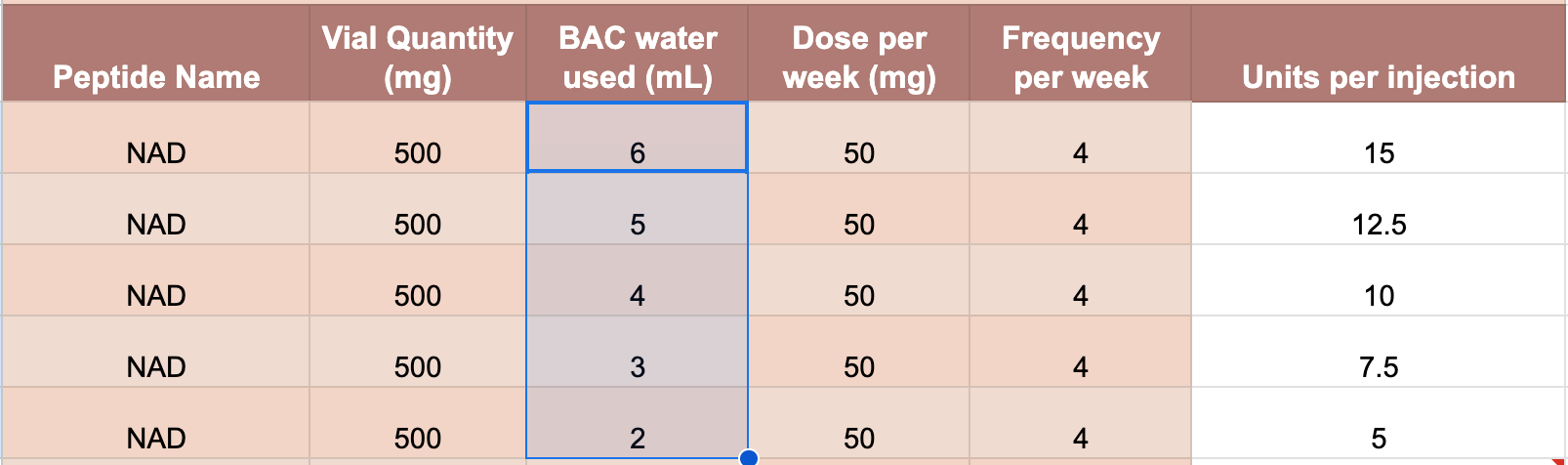
If you want to inject less liquid, use less BAC water for reconstitution. See the difference?
6mL = injecting 15 units per injection, 4x a week
4mL = injecting 10 units per injection, 4x a week
2mL = injecting 5 units per injection, 4x a week
And again, these are all going to be the same dose. But you can choose your preference.
*In the case of NAD, maybe 2mL won’t be enough BAC water to fully dissolve the peptides, so then you could add 2mL more.
How to reconstitute your peptides
Step by step
If you prefer to see this in video format, click here
Set up your workspace
Wash your hands thoroughly with soap and water
Dry your hands using a clean paper towel (not a hand towel as that harbours bacteria)
Wipe down your working surface with an alcohol wipe or disinfectant
Lay out your supplies
Sterile 29G 1mL syringes (individually sealed and in its pouch)
Each syringe should only be used once, so if you need to reconstitute with 3mL, you should have 3 syringes
Alcohol prep pads
Peptide vial (powder form)
BAC water
Small container for trash
Prepare the vials
Take the peptide vial and the BAC vial out of their packaging
If there are flip-off caps on the tops, pop those off to expose the rubber stoppers
Dispose of caps and packaging
Sanitize vials
Wipe the rubber stopper and the surrounding tops with an alcohol pad
Do this for the peptide and the BAC water
Each one should get a new alcohol pad
Discard alcohol pads
Open your sterile syringes
Take the syringes (needles) out of their sealed pouches (leave the orange caps for now)
Discard pouches
Each syringe has orange caps
One that covers the needle
One that covers the plunger
Remove only the orange cap from the plunger end of the syringe
Discard plunger caps
Hold the syringes (with the cap on the needle), and pull back air to 1mL (100 units)
This prevents any foreign airborne particles from entering your syringes
Do this for all the syringes
Remove the needle cap without touching the needle
Insert the needle straight through the rubber stopper of the BAC water
Push the air into the vial (this helps to equalize pressure)
Invert the vial upside down and slowly pull back the plunger to draw up the amount of water you need (1mL or 100 units)
Check for big air bubbles; gently tap the syringe so bubbles rise to the top and push them back into the vial if needed.
When you have the correct amount, slowly withdraw the needle from the vial.
Take the peptide vial and insert the needle through its rubber stopper.
Slowly push the plunger so the BAC water runs down the side of the vial, not directly blasted onto the powder.
This helps keep the powder from foaming or clumping.
Once all the BAC water is in, remove the needle
bend the needle against a flat surface
recap it
and immediately dispose of the syringe/needle in your sharps container
Let the peptide dissolve
Do not shake the vial aggressively
Gently roll or swirl the vial between your fingers to help it mix
Store the reconstituted peptide in the fridge